








Stations, Seeds, and Stones
The Journey behind a Journey
During the season of Lent, the community at Trinity Theological College has been invited to walk the Via Dolorosa, a guided prayer journey following our Lord’s path to the cross. The heart behind it was simple: in the midst of seminary life, where study, ministry preparation, and many other demands can make the days feel full and fast, the Via Dolorosa created room for students, faculty, and staff to slow down and attend more carefully to Christ on the road to the cross. It invited us not to analyse Christ from a distance, but to walk prayerfully with him through Scripture, silence, reflection, confession, and hope. It became, in that sense, not simply an activity, but a way of making room for the Lord to search us, humble us, and draw us again to himself.
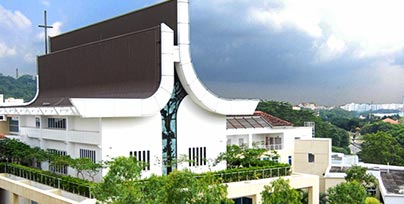
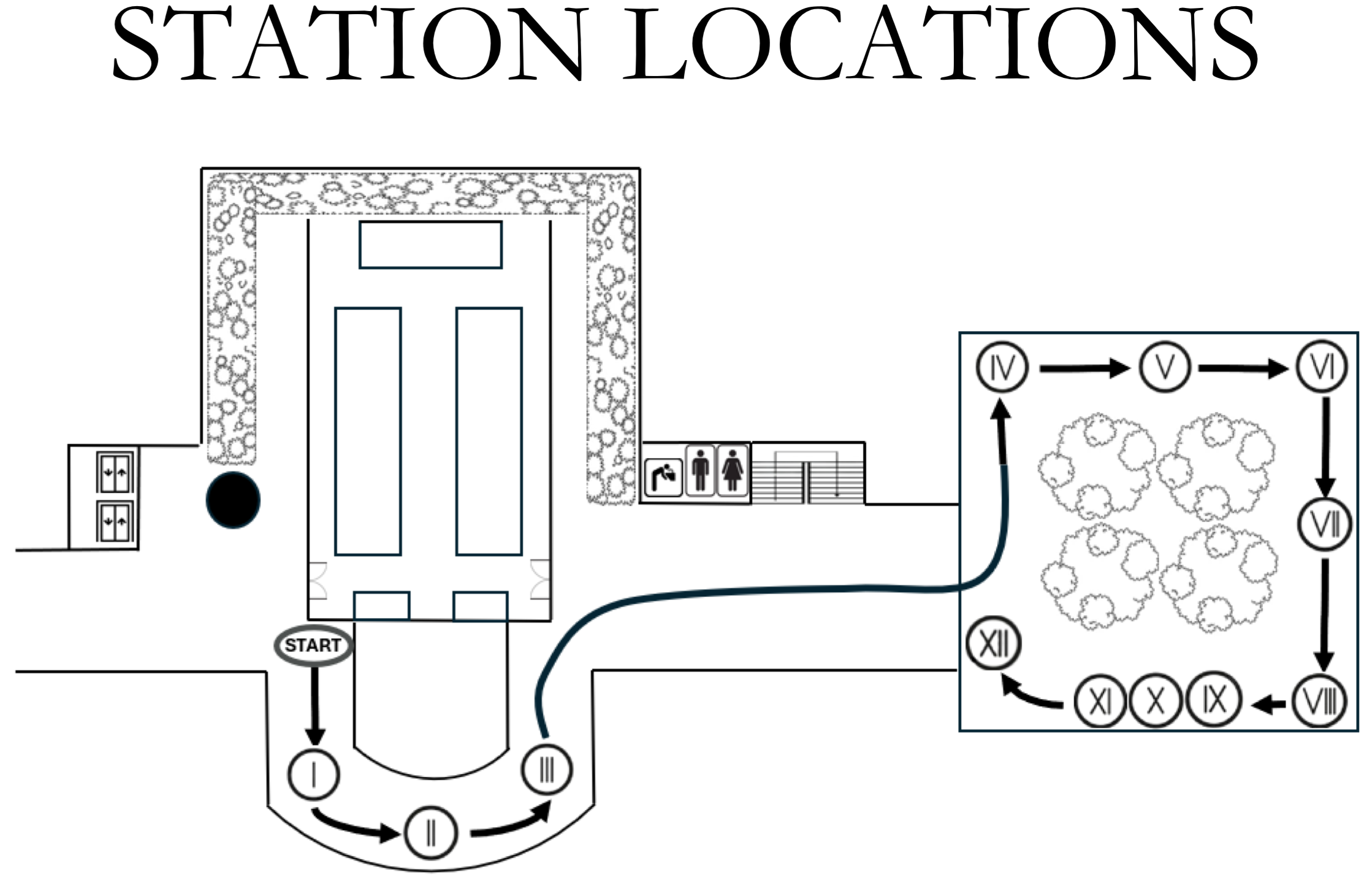
The physical layout of the stations was simple but intentional. They began around the chapel, the college’s shared space of weekly worship, and ended in the prayer garden, a quieter space that gently recalled Gethsemane and invited prayerful reflection.
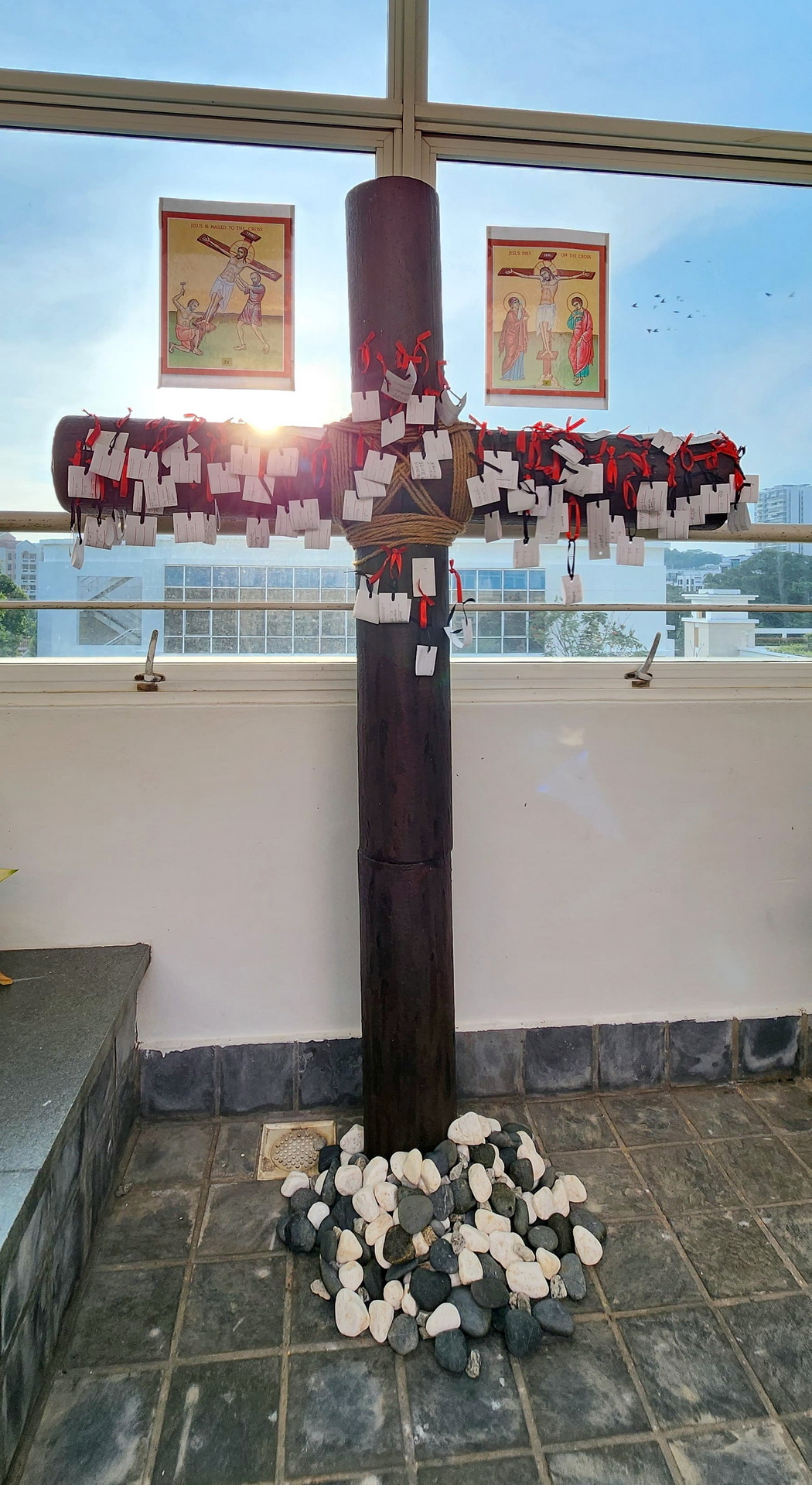
Each station was marked by an icon, which participants were invited to look upon as they engaged with Scripture, reflection, and prayer. Optional prayer actions allowed the journey to be experienced not only through words, but also through touch and embodied response.
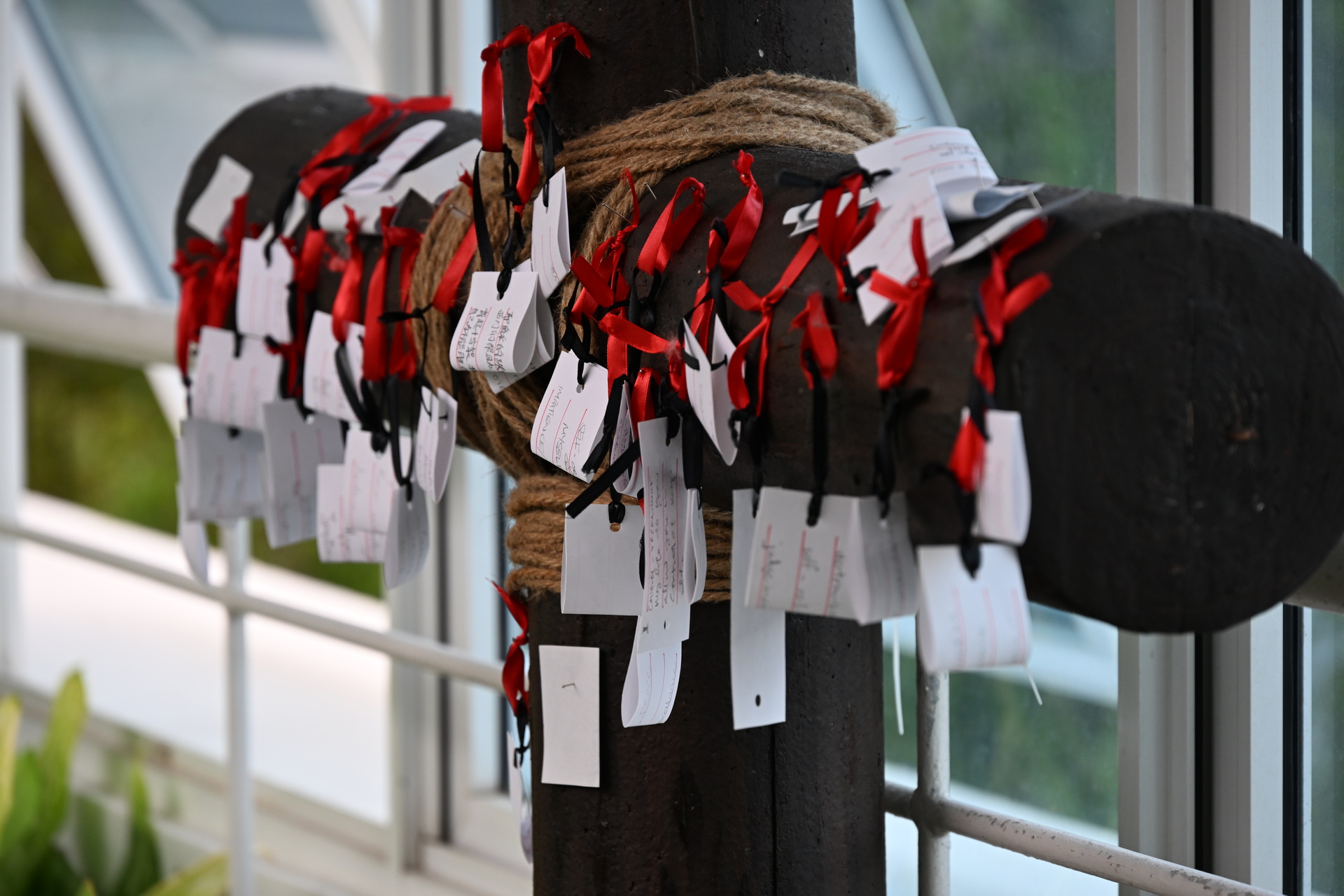
Participants wrote words of confession and bound them with threads symbolising repentance and mercy before pinning them to the cross. They also carried stones representing the burdens of temptation, false judgement, and hardness of heart, which they later left at the foot of the cross.
These actions gave visible and tangible form to truths we hear often, yet can slowly grow numb to—that Christ bore the sin we confess, took upon himself the weight we could not bear, and alone offers the forgiveness and freedom we long for. As more people completed the journey, the cross at the end of the path stood as a growing witness to Christ’s obedience and faithfulness.
A highlight in preparing for the Via Dolorosa was when I began to see the Holy Spirit drawing together my apparently disparate roles as the Spiritual Formation student representative and co-chair of the gardening committee, bringing these two areas of service into conversation with one another. This was especially clear in the stations where Christ is taken from the cross and then laid in the sepulchre. The initial idea was simply for participants to take a seed as a sign that burial is not the end, and that in Christ even what seems hidden and lifeless still carries the promise of life.
From there, the symbolism deepened. The seeds chosen were torch ginger, candle bush, and flame vine, whose names all evoke light, making them a fitting expression of our college motto, Lux Mundi, Light of the World. After Resurrection Sunday, these seeds will be planted in a section of the newly renovated garden set aside for flowering plants that support pollination. This area, surrounded by passion fruit vines, recalls Christ’s passion. In this way, the image comes together: Christ’s passion surrounds us and it is his suffering love that has brought us together as a community. As his people, we are sent out, like pollinators, to carry his light into the world and, through it, bring life.
What has moved me most, however, has not simply been the work itself, but the way God has used it. I had initially wondered whether anyone would make time for the Via Dolorosa in such a busy season. Instead, I have been deeply humbled to hear how it has helped people to repent, pray, and linger with Jesus more attentively in the midst of their struggles. At times, the personal responses from lecturers and peers have brought me to tears. Others have shared the Via Dolorosa with friends beyond the college, and some from outside the community have expressed a desire to come and walk it as well. That widening response has felt less like affirmation of a project and more like a quiet sign of the Lord’s kindness in using this work of love and prayer to draw people nearer to himself.
One student shared a response that has stayed with me. When they came to the part of the journey where they were invited to “nail” their confessions to the cross, they found that they were reluctant to do so. They said, “I think it’s because the cross looked burdened with many people’s ‘stuff’. So I didn’t want to add more to it. I just wanted to quietly sit in one corner and look at what Christ had done.” There was something deeply honest in that reaction, since I am sure many of us know what it is to look at the cross with sorrow, not wanting to burden Christ further, but simply to stand back in reverent silence.
And yet this, too, drew me into a deeper reflection on the cross. We are not burdening Christ afresh by bringing our sin and sorrow to him time and time again. We are entrusting to him what he has already borne in his obedient love for the Father and his merciful love for us. To see what others have already laid there, and then to place our own beside it, is to remember that we do not come alone, but as members of Christ’s body, all in need of the same grace.
In the end, Via Dolorosa is not fundamentally about creativity, atmosphere, or preparation, though this year’s journey was certainly shaped with much care and prayer. It is always about Christ, and about making room to behold him more attentively on the way to the cross. It is about pausing long enough to behold the Holy One, the beloved Son, who was despised, rejected, burdened, pierced, and yet full of mercy; the One who for our sake tasted death, bore our sin, and entered the depth of our estrangement. He took upon himself the sorrow, judgment, and anguish of sin, and cried out from within that darkness for us. That should move us to sorrow. Yet as Jesus tells the women of Jerusalem, our sorrow must also turn inward: we do not merely weep for him, but for ourselves, for our sin, and for the world that nailed him there. But this sorrow is not without comfort, for the One who walked that road is our merciful High Priest, able to sympathise with our weakness because he has borne our condition in full.
And so the journey is about acknowledging the reality of our sin, not to dwell in guilt, but to entrust it to Christ, who has borne it in love. And it is about continuing on the way with hope, because as we make our way toward Resurrection Sunday, we are not called to remain at the tomb, but to draw near to the throne of mercy, where our Lord carries us, forms us, and sends us out into the world as his own. My prayer is that those who walked the Via Dolorosa not only reflected on these things, but encountered the living God in and through them.
I am grateful to all who supported this process through conversations, encouragement, and prayer. I am especially thankful to our chaplain, Rev Dr Samuel Wang, who, through conversations about how the prayer garden might be used more fully for Vespers, encouraged me to give this a try, and supported me throughout its preparation.
By Regan Lee Britstra (MDiv 1)